|
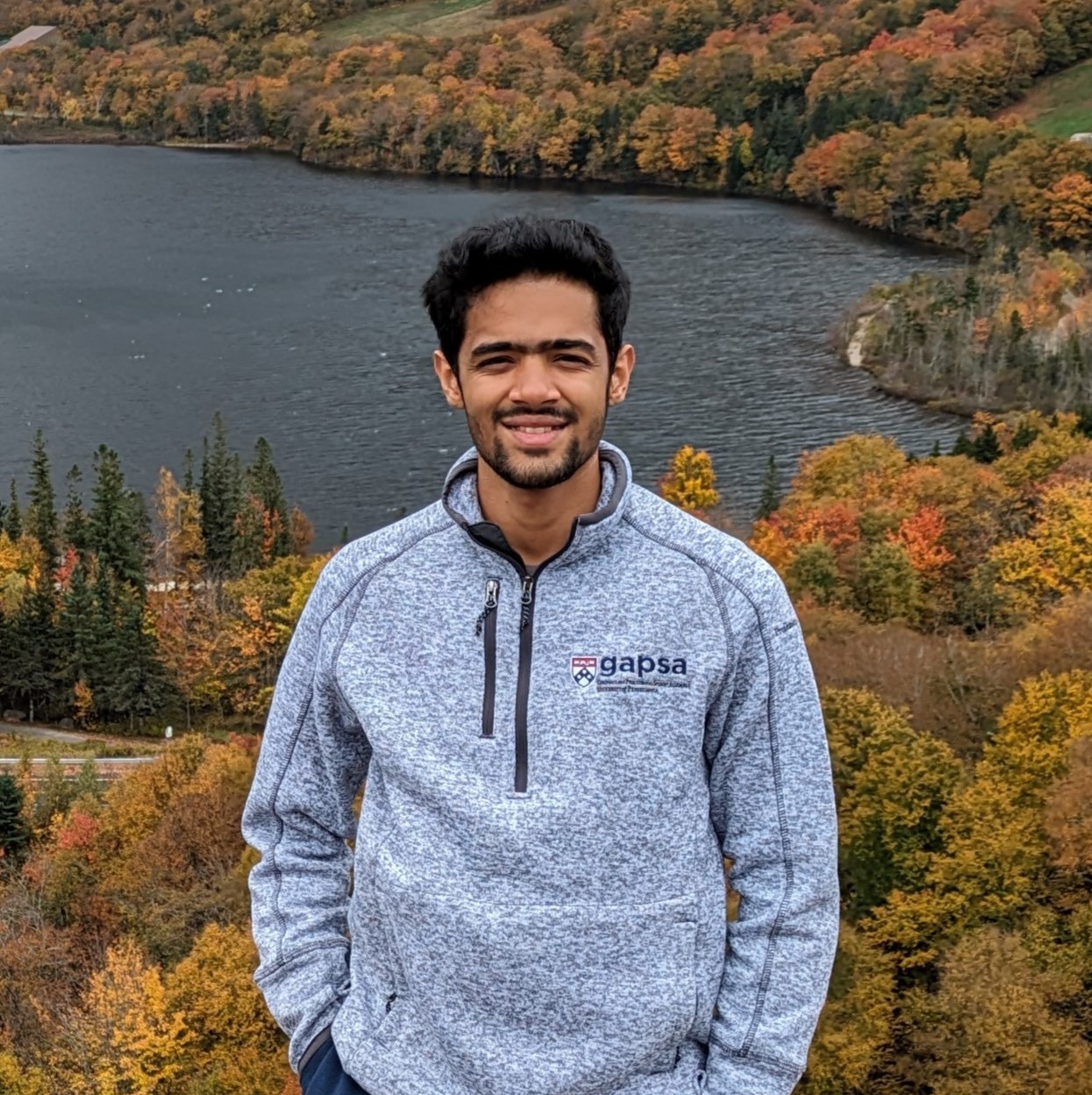
I am a Robotics Software Engineer at Near Earth Autonomy in Pittsburgh, where I focus on perception, mobility planning, and autonomous trajectory generation for the UAV - Firefly autonomous cargo transport program. Previously, I worked as a Robotics & ML Engineer at MagLev Aero Inc. developing advanced controls and aerodynamic modeling systems. I hold a Master's degree in Robotics and Applied Mechanics from the University of Pennsylvania, where I was affiliated with the GRASP Lab. My expertise spans perception, path planning, trajectory optimization (Minimum Snap/QP), and machine learning. I also serve the robotics community as an academic peer reviewer, regularly evaluating manuscripts for journals such as the IEEE Transactions on Automation Science and Engineering. In my free time, I love to explore the wilderness, hike, and document my journeys. I share travel and culinary experiences on my personal blog, and create video content for my 300+ subscriber channel on YouTube. |
|
|
|
|
|
|
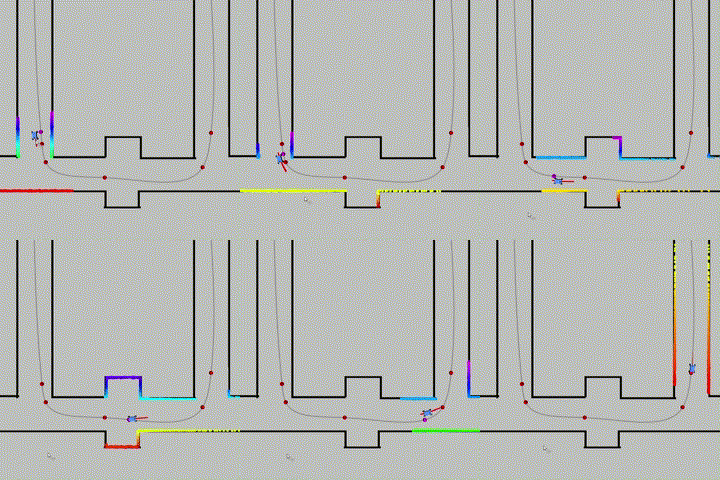
Summer 2022 Our team participated in the 10th Autonomous Racing F1Tenth competition held at ICRA 2022, securing the title for the "Fastest Car". Our autonomous race car processed 2D LiDAR scans at 25ms, leveraging a spline-based RRT* path planner paired with Pure Pursuit tracking to dynamic-avoid opponents. Localization was achieved through Hector SLAM and a highly tuned particle filter tailored for head-to-head racing. |
|
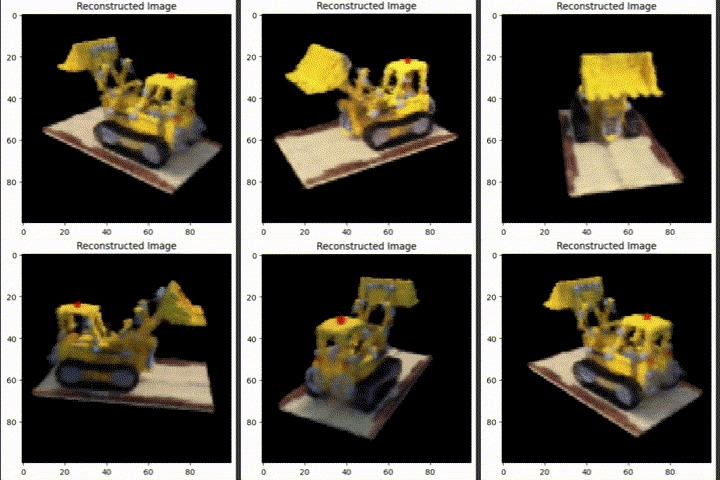
Spring 2023 Code: Implemented Neural Radiance Fields (NeRF) in PyTorch to synthesize photorealistic 3D views of a complex LEGO model from a set of 2D images. The model training utilizes positional encodings and hierarchical volume sampling inspired by the original NeRF architecture. |
|
|
Fall 2022 Code: | Report: PDF Link Developed pick-and-place routines for static and dynamic objects on a 7-DOF Franka Emika Panda robot. Features an eye-in-hand USB camera tracking AprilTags. Path planning is resolved using A*, RRT, and Artificial Potential Fields inside a ROS environment. Trajectory tracking is smoothed using a Hierarchical finite-horizon Model Predictive Control (MPC) algorithm. |
|
|
Spring 2023 Implemented a non-linear geometric controller for quadrotors. Integrated an Error-State Kalman Filter (ESKF) for state estimation using visual-inertial odometry inputs. Explored collision-free path finding using A* combined with a Ramer-Douglas-Pecker simplification pass, feeding into a Minimum Snap trajectory optimization generator. |
|
Summer 2023 Code: Implemented a linearized Model Predictive Controller (MPC) utilizing the kinematic bicycle model for tracking optimal racing lines in a high-fidelity ROS2 F1Tenth simulator. |
|
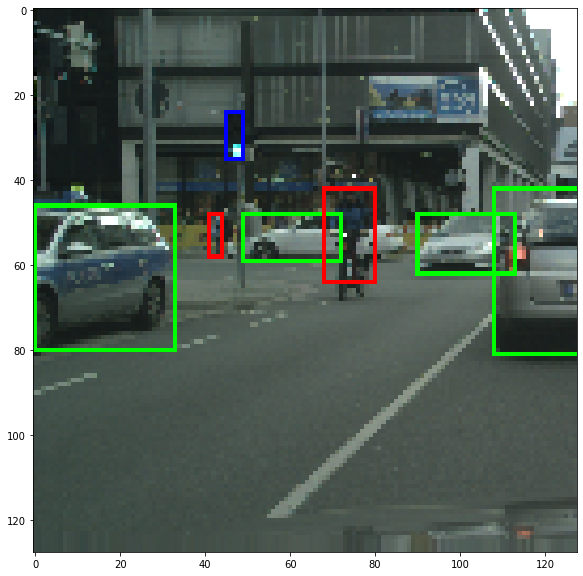
Fall 2022 YOLO: | SOLO: Explored state-of-the-art deep learning architectures for computer vision in CIS 6800. Implemented and trained object detection models like YOLO, as well as single-stage instance segmentation pipelines like SOLO on custom datasets. |
|
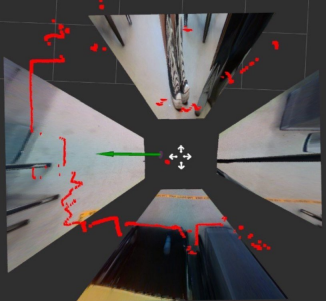
Spring 2022 Code: | Report: PDF Link Created an Inverse Perspective Mapping (IPM) visual pipeline overlaying forward-facing camera feeds directly onto local 2D grids. This visual state estimation was merged with spline-based dynamic obstacles prediction to allow for vision-based real-time planning. |
|
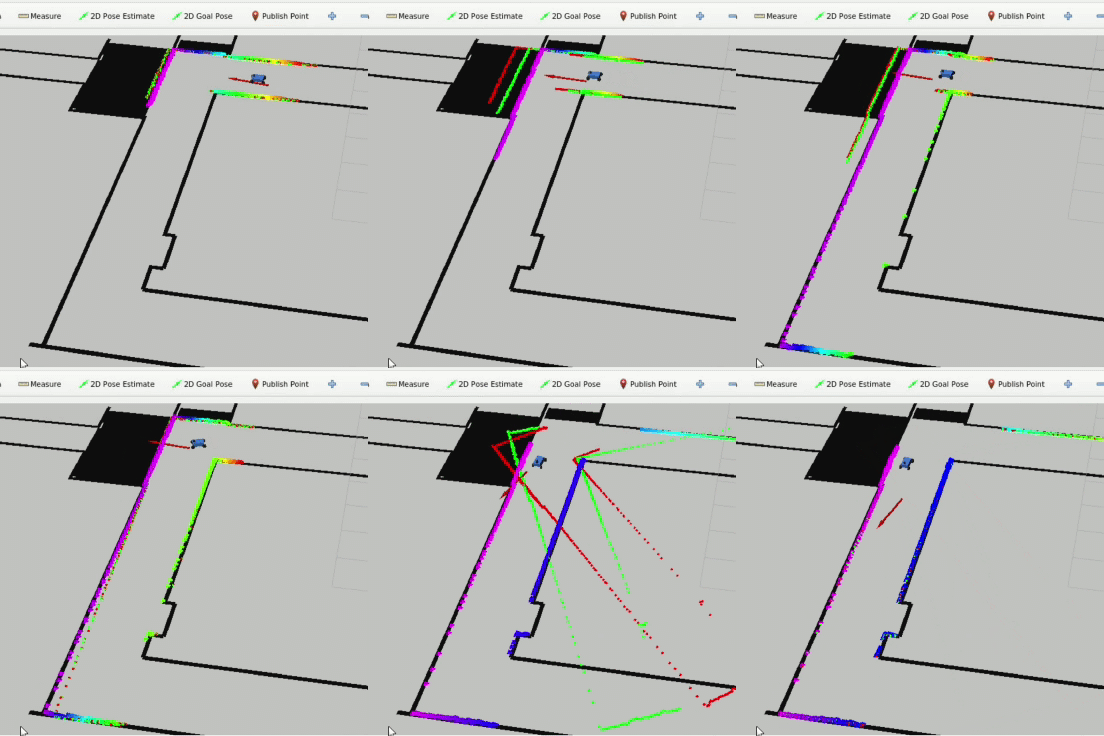
Spring 2022 Videos: ICP Demo | Hector SLAM Programmed a point-to-line Iterative Closest Point (ICP) algorithm based on Andrea Censi's framework. Used a particle filter for real-time localization and map matching paired with Pure Pursuit controls. |
|
|
Spring 2023 Designed and tested an Operational Space Controller (OSC) to stabilize a biped walker model inside Pydrake. The controller targeted three principal constraints: torso roll, center of mass alignment, and swing-foot clearance to generate fluid walking trajectories. |
|
|
Fall 2022 Engineered value iteration algorithms in a stochastic gridworld setup. Modeled non-ideal environment physics like surface friction variations (simulating slippage/oil spills) and dynamic collision barriers to evaluate convergence rates across varying discount factor ($\gamma$) values. |
|
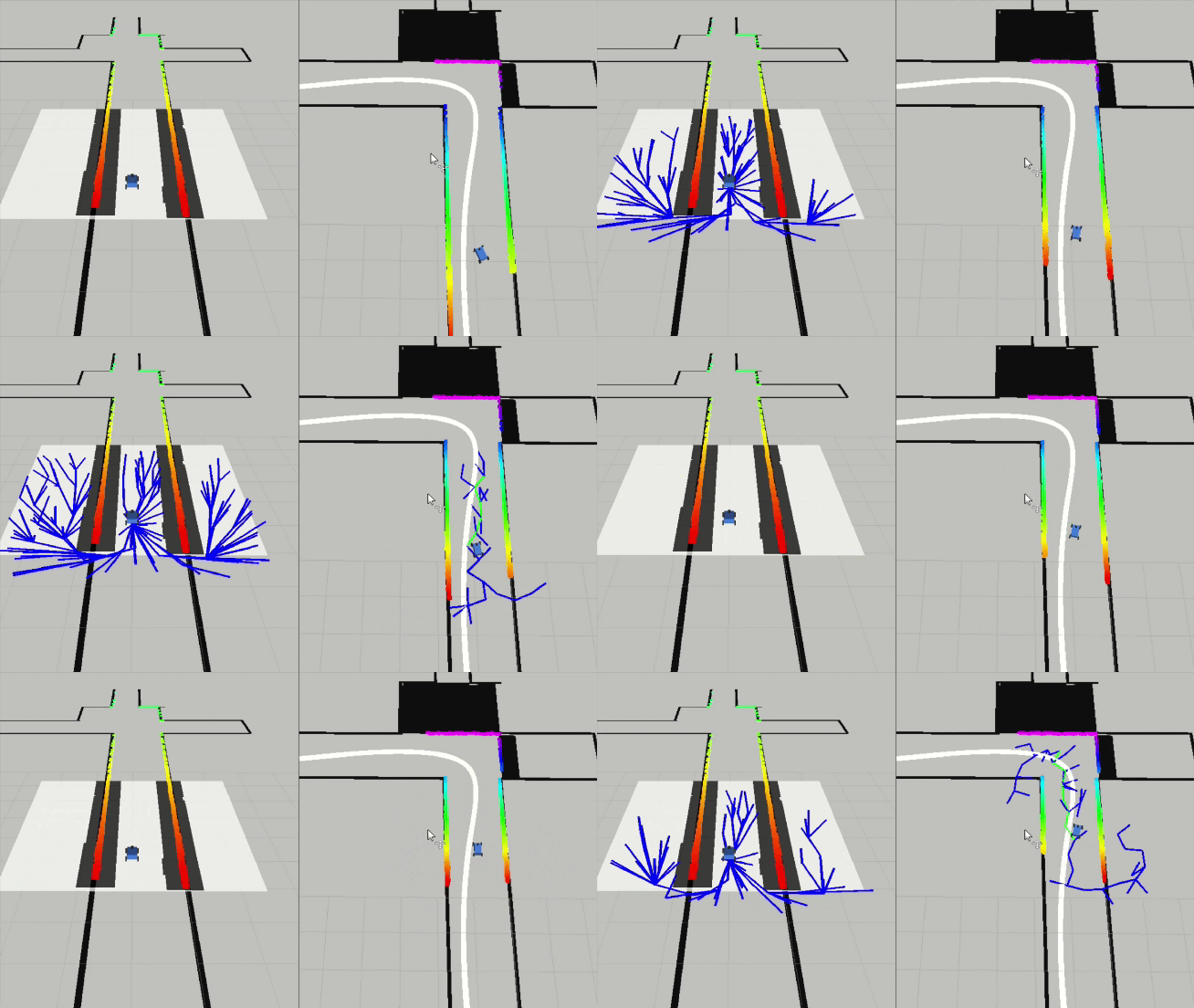
Spring 2022 Code: Evaluated and compared sampling efficiency and path optimality between standard Rapidly-exploring Random Trees (RRT) and asymptotically optimal RRT* inside binary occupancy grid frameworks. |
|
|
Spring 2023 Used classical computer vision projective geometry and homography transformations to projection-map the Penn Engineering logo onto a dynamic soccer pitch broadcast frame in perspective-coherent placement. |
|
|
Fall 2022 Explored multi-tier flight controls including iterative Linear Quadratic Regulators (iLQR), Model Predictive Control (MPC), and tracking pipelines utilizing time-varying LQR profiles for quadrotor stability. |
|
|
Spring 2023 Video: YouTube Wrote a custom rendering visualizer in 2D graphics space using coordinate structures and edge indices loaded from flat files. Includes transformation pipelines for click-to-drag rotation, wireframe overlays, and simple polygon lighting shaders. |
|
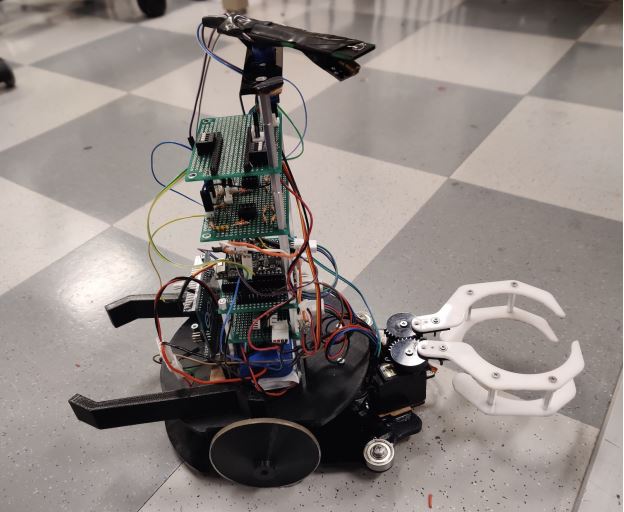
Fall 2021 Designed and manufactured a custom physical autonomous wall-following combat robot. Written in C, featuring obstacle detection, frequency filtering to seek dynamic targets, and HTC Vive infrared-based indoor localization. |
Website creatively modified from the original template by Jon Barron.